

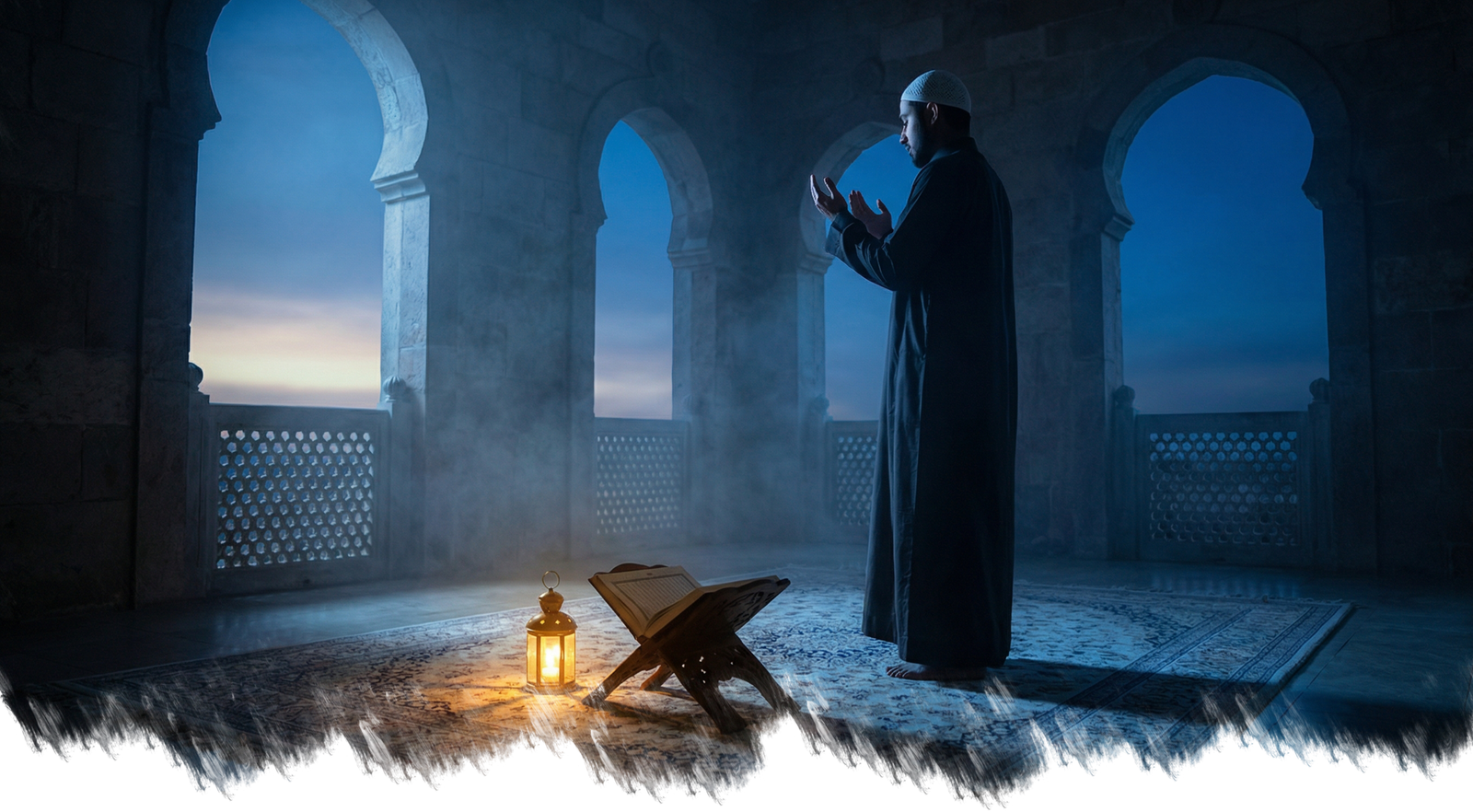
Praying Tahajjud is a spiritual act of worship that allows Muslims to connect with Allah during the tranquil hours of the night.
It is a Nafl (voluntary) prayer that holds immense blessings and is highly recommended for people who are seeking closeness to Allah and inner peace.
Here, we explore the significance of Tahajjud, the best time to perform it, and a step-by-step guide on how to pray.
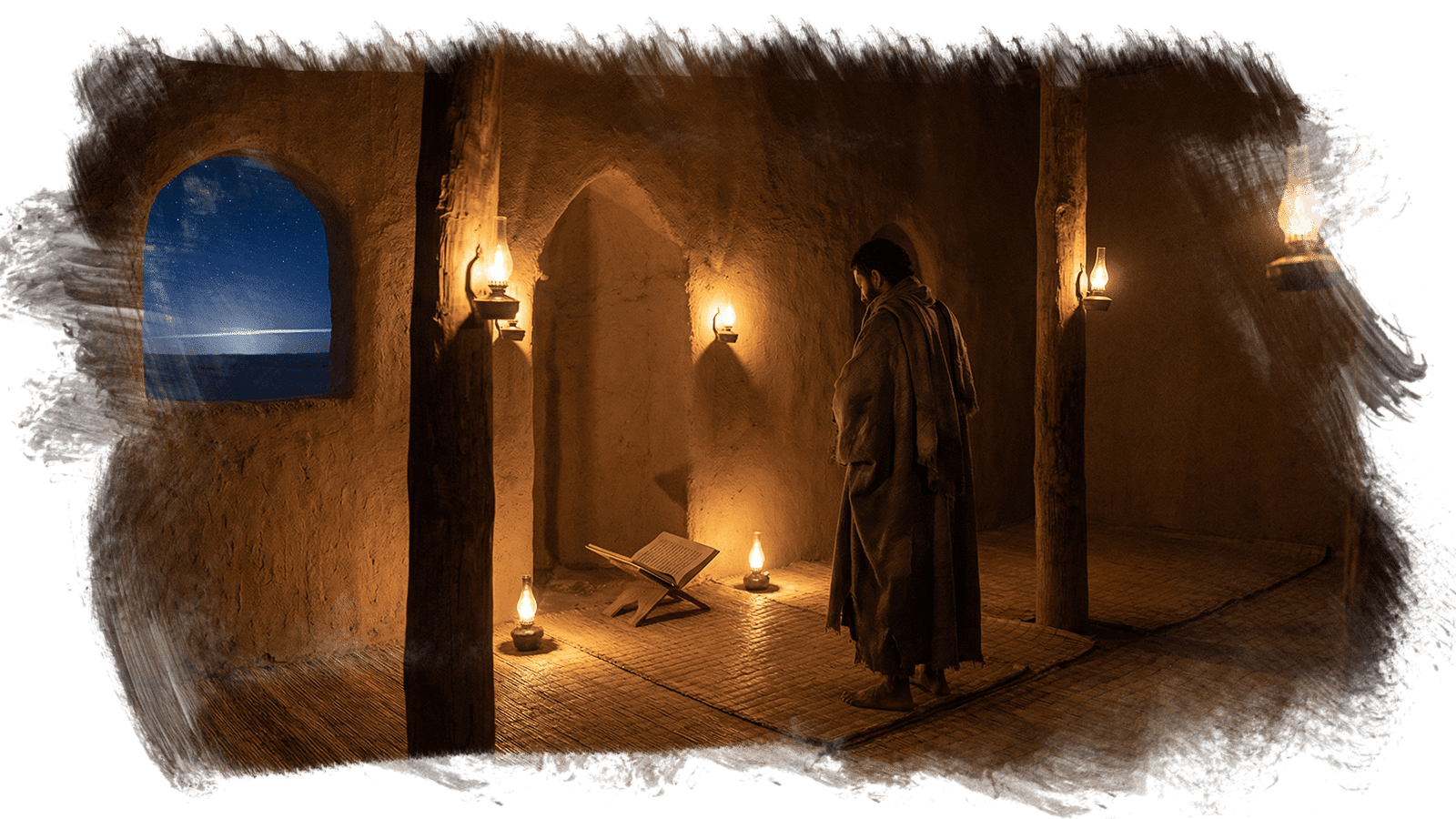
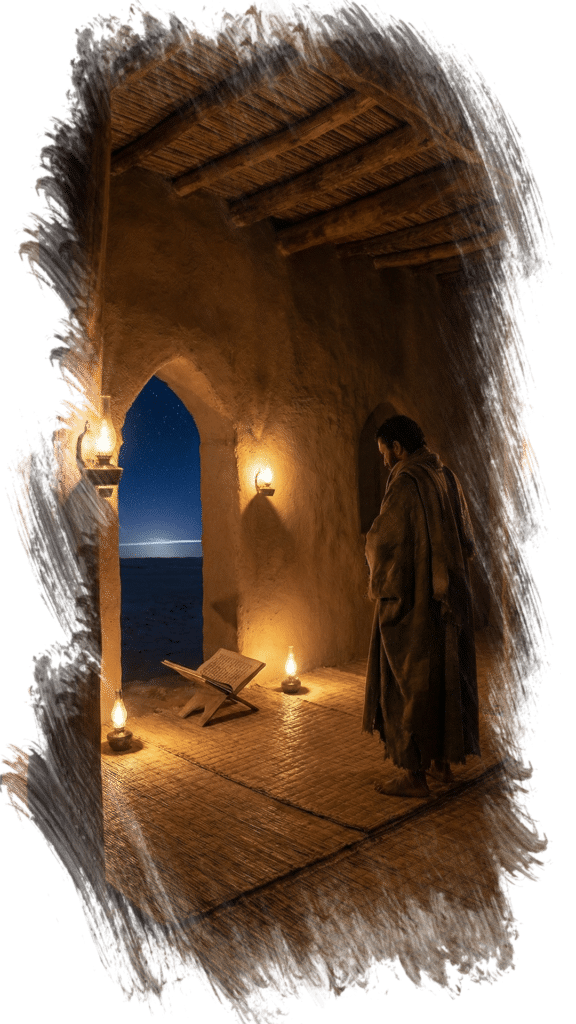
Performed during the last third of the night – after the Isha prayer and before Fajr – Tahajjud, or qiyām ul-layl, is an act of devotion that allows us to connect deeply with Allah.
While it is not an obligatory prayer, Tahajjud holds immense significance. Allah says in the Qur’an:
ﱭ ﱮ ﱯ ﱰ ﱱ ﱲ ﱳ ﱴ ﱵ ﱶ ﱷ ﱸ ﱹ
Wa minal laili fatahajjad bihee naafilatal laka ‘asaaa any yab’asaka Rabbuka Maqaamam Mahmoodaa
English Translation:
And from [part of] the night, pray with it as additional [worship] for you; it is expected that your Lord will resurrect you to a praised station.
— (Surah Al-Isra, 17:79)
Tahajjud was consistently performed by the Prophet Muhammad (peace be upon him).
He (PBUH) said:
Hold on tight to the night prayer. Indeed it is the habit of the righteous who came before you. It brings you close to your Lord, wipes away your sins, prevents you from sinning and repels sickness from the body.
[Hadith |Tirmidhī]
This prayer embodies humility and dedication, fostering a sense of closeness to Allah that strengthens faith and patience.
Tahajjud can be prayed anytime after Isha and before Fajr. However, the most rewarding time is during the last third of the night.
Allah says in the Qur’an:
ﱁ ﱂ ﱃ ﱄ ﱅ ﱆ ﱇ ﱈ ﱉ ﱊ ﱋ ﱌ ﱍ ﱎ ﱏ ﱐ ﱑ ﱒ ﱓ ﱔ ﱕ ﱖ ﱗ ﱘ ﱙ ﱚ ﱛ ﱜ ﱝ ﱞ ﱟ ﱠ ﱡ ﱢ ﱣ ﱤ
Ya aiyuhal muzzammil. Qumil laila illaa qaleelaa. Nisfahooo awinqus minhu qaleelaa. Aw zid ‘alaihi wa rattilil Qur’aana tarteela. Innaa sanulqee ‘alaika qawlan saqeelaa. Inn naashi’atal laili hiya ashadddu wat anw wa aqwamu qeelaa
English Translation:
— (Surah Al-Muzzammil, 73:1-6)
The Prophet Muhammad (PBUH) also said:
Our Lord descends every night to the lowest heaven when one-third of the night remains, and He says: ‘Who will call upon Me, that I may answer him? Who will ask of Me, that I may give him? Who will seek My forgiveness, that I may forgive him?’
[Hadith | Sahih al-Bukhari, 1145 & Sahih Muslim, 758]
Before beginning the Tahajjud prayer, it’s important to prepare yourself by performing Wudu (ablution), finding a quiet and clean space for prayer, and deciding the number of Rakats (units of prayer) you’d like to pray.
Tahajjud is prayed in sets of two rakats, and there is no fixed number as to how many to pray.
Here is a quick step-by-step on how to read Tahajjud:
Stand facing the Qibla with your feet shoulder-width apart.
You should then make a sincere intention to pray Tahajjud to seek Allah’s pleasure.
Raise your hands and say “Allahu Akbar” (Allah is the greatest) to begin the prayer. Place your right hand over your left above your chest.
Recite Surah Al-Fatihah (the opening chapter of the Quran), followed by another Surah or at least three verses from the Quran.
Bow (Rukoo’) by saying “Allahu Akbar” and place your hands on your knees. Say “Subhana Rabbiy-al-Adheem” (Glory be to my Lord Almighty) at least three times.
Rise from the bowing position and stand upright while saying, “Sami’ Allahu liman hamidah” (Allah hears those who praise Him) followed by “Rabbana lakal hamd” (O our Lord, to You is the praise).
Prostrate (Sujood) by saying “Allahu Akbar” and place your forehead, nose, palms, knees, and toes on the ground. Say “Subhaana Rabbiy-al-A‘laa” (Glory is to my Lord, the Most High) at least three times.
Sit up briefly while saying “Allahu Akbar.” Then return to Sujood, repeating “Subhaana Rabbiy-al-A‘laa” at least three times.
Rise from the prostration and stand up saying “Allahu Akbar.” This concludes one Rak’ah.
Begin the second Rak’ah and repeat steps 4–8.
After completing two Rak’ahs, sit and recite the Tashahhud (At-tahiyyatu lillah, was-salawaatu wat-tayyibaat. As-salaamu ’alayka ayyuhan-Nabiyyu wa rahmat-Ullahi wa barakaatu. As-salaamu ’alayna, wa ’alaa ‘ibaadi-llahis saaliheen. Ashhadu alla ilaha illallah wa ashhadu anna muhammadan ‘abduhu wa rasuluhu).
Send Salawat upon the Prophet Muhammad (PBUH) by reciting: “Allahumma Salli ‘ala Muhammadin wa ‘ala aali Muhammadin, kama sallaita ‘ala Ibrahima wa ‘ala aali Ibrahima innaka Hamidum-Majeed. Allahumma barik ‘ala Muhammadin wa ‘ala aali Muhammadin kama barakta ‘ala Ibrahima wa ‘ala aali Ibrahima innaka Hameedum-Majeed”.
It is highly recommended to recite some Sunnah du’as (supplications) at this point.
Conclude the prayer by turning your head to the right and then to the left, saying “Assalamu alaikum wa rahmatullah” each time.
After completing your prayer, make heartfelt supplications to Allah. This is a powerful time for Du’a, as the Prophet Muhammad (PBUH) said:
The closest that a servant comes to his Lord is during the last part of the night, so if you can be among those who remember Allah at that time, then do so.
[Hadith | Sunan al-Tirmidhi, 3579]
Praying Tahajjud is a beautiful way to nurture your connection with Allah (SWT).
By dedicating a portion of your night to this voluntary act of worship, you open your heart to Allah’s mercy and blessings.
Tahajjud is also a powerful time for Du’a, with greater chances of your prayers being accepted during these quiet hours.
Even if you start with just two rakats, aim to pray Tahajjud regularly. The key is consistency. The Prophet (PBUH) said:
The most beloved deeds to Allah are those that are consistent, even if they are small.
[Hadith | Sahih al-Bukhari, 6464 & Sahih Muslim, 2818]
During Ramadan, Tahajjud holds even greater significance for many believers, as the rewards for worship and prayer are multiplied, making it an ideal time to strengthen our bond with Allah.
Tahajjud is not about the quantity of your prayer but the sincerity and effort you put into it. Whether you are seeking forgiveness, guidance, or a deeper connection with Allah, this special prayer is a profound way to achieve it.
“Verily, in the remembrance of Allah do hearts find rest.” Surah Ar-Ra‘d (13:28)
See an error against Qur’an or Sunnah?
Please let us know.
© 2026 All Rights Reserved.